What Customs Clearance Actually Involves
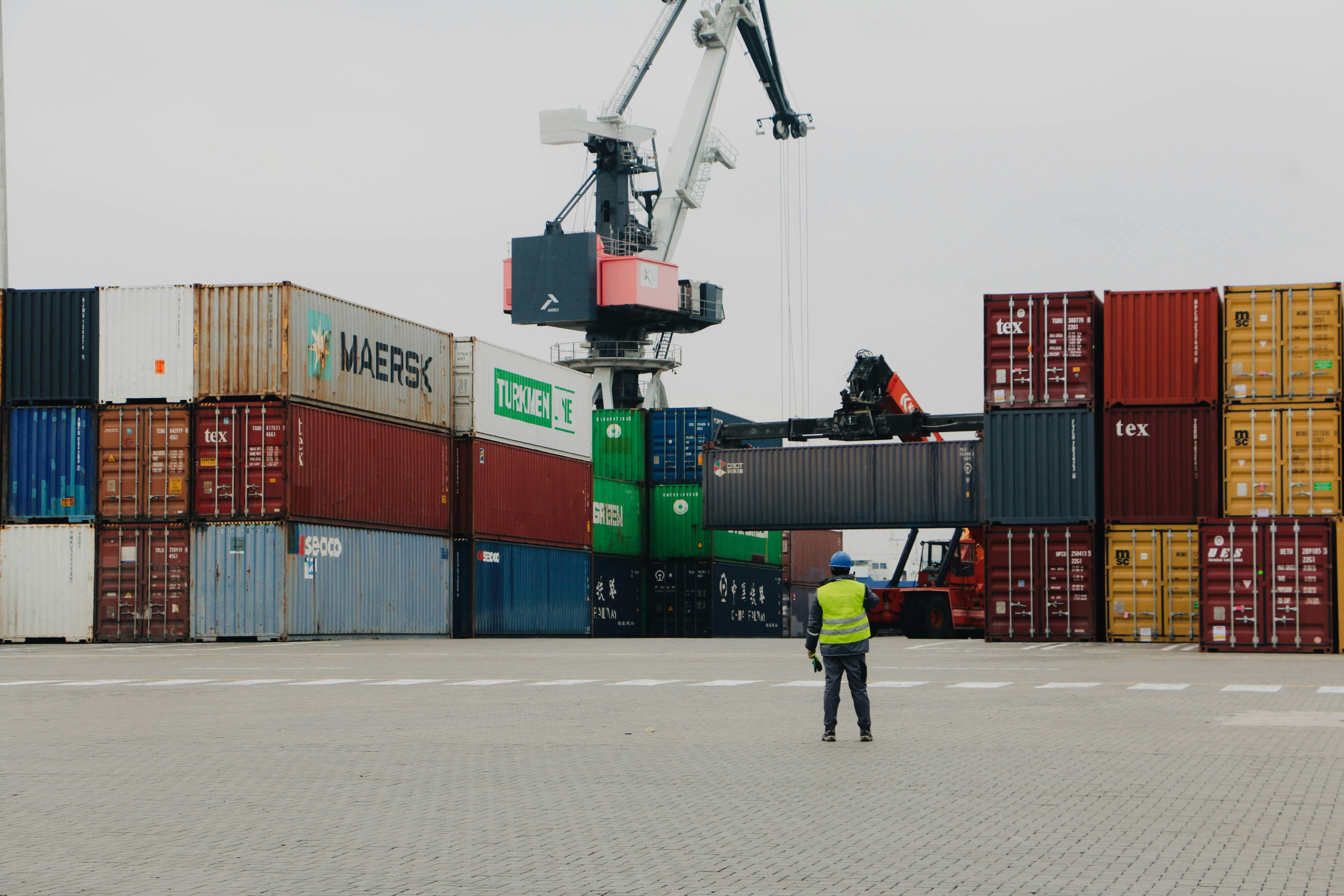
When goods arrive in Spain from outside the European Union, they do not go directly to the importer. They enter a customs area — whether at Madrid-Barajas airport, the port of Valencia, Algeciras, or a land border crossing — and remain there until the customs authority (the Agencia Tributaria) has processed the declaration, verified the documentation, assessed any duties owed, and released the goods.
This process is known as despacho de aduanas in Spanish. It is handled by a licensed customs agent — called an agente de aduanas or representante aduanero — who submits the import declaration electronically on behalf of the importer. In practice, most freight forwarders coordinate this as part of their service.
EU imports are different. Goods moving between EU member states are in free circulation and do not require customs clearance. The procedures described here apply to shipments arriving from outside the EU — China, the UK (post-Brexit), the US, Morocco, and anywhere else outside the single market.
The Documents You Need
Customs clearance in Spain requires a specific set of documents for every non-EU import. Missing or incorrect documents are the most common cause of delays. Here is what is needed in most standard import cases:
| Document | What it is |
|---|---|
| Commercial Invoice | Issued by the seller. Must show value, currency, quantity, product description, Incoterm, and both parties' full details. This is the customs authority's primary reference for valuation. |
| Packing List | Itemises the contents of each package — weights, dimensions, and quantities. Must match the invoice exactly. |
| Bill of Lading / AWB | The transport contract. For sea freight, the Bill of Lading (BL). For air freight, the Air Waybill (AWB). Required to prove the goods are in transit and identify the shipment. |
| EORI Number | The importer's Economic Operator Registration and Identification number. Mandatory for any company importing into the EU. Spanish companies register through the Agencia Tributaria. |
| Certificate of Origin | Required when a preferential duty rate applies (e.g. under an EU trade agreement). The EUR.1 form is common for many trading partners. Not always mandatory but needed to claim reduced tariffs. |
| Import Licence (if applicable) | Required for certain regulated categories: food, chemicals, textiles, electronics with radio frequency, pharmaceuticals, and goods subject to trade controls or sanctions. |
For specific product categories — particularly food, animals, plants, and medical devices — additional certificates from SOIVRE, AECOSAN or the Ministry of Agriculture may also be required before clearance can be granted.
The DUA: Spain's Customs Declaration Form
The central document in Spanish customs clearance is the DUA — Documento Único Administrativo. It is the standardised EU customs declaration form, submitted electronically through the AEAT (Agencia Estatal de Administración Tributaria) system. Every import from outside the EU requires a DUA.
The DUA captures everything the customs authority needs: the HS (tariff) code for the goods, the declared value, the origin country, the duty and VAT amounts, the importer's EORI number, and the transport details. An error in any of these fields — an incorrect HS code, a mismatch with the invoice value, a missing EORI — will trigger a hold while corrections are requested.
The DUA is submitted by the customs agent, not directly by the importer. This is why choosing the right agent matters: a knowledgeable agent will catch classification or valuation issues before submission, not after the shipment has been stopped.
How Import Duties and VAT Are Calculated
Two charges apply to most non-EU imports into Spain: import duty and import VAT (IVA a la importación).
Import duty is set by the EU Common External Tariff. The rate depends on the HS code — the international product classification number. Rates range from 0% (for many raw materials and capital goods) to 12–17% for finished consumer goods, with higher rates for some protected sectors such as textiles and agriculture. You can look up the applicable rate for any product using the EU's TARIC database.
Import VAT is charged at the standard Spanish rate of 21% (reduced rates of 10% or 4% apply to certain food, medicines, and other categories). It is calculated on the customs value plus the duty paid — not just on the invoice price. Importantly, import VAT paid by a Spanish company with a valid VAT number is generally recoverable through the quarterly VAT return, so it is a cash flow cost rather than a permanent one.
Customs value is not always the invoice price. Under the CIF valuation method used at Spanish seaports and airports, customs value includes the cost of goods, insurance, and freight to the first EU port of entry. If your Incoterm is FOB or EXW, the customs agent must add estimated freight and insurance costs to arrive at the correct customs value. Undervaluing — deliberately or by mistake — is the most common trigger for customs audits.
AJ Logistics · Madrid
Need customs clearance in Spain?
We handle the declaration, the agent and the paperwork — you focus on your business.
The Clearance Process Step by Step
The Most Common Reasons Shipments Are Delayed
In our experience managing imports through Spanish customs, the same issues come up repeatedly:
- Incorrect or vague product descriptions on the invoice. "Machine parts" or "electronic components" is not enough — customs needs a precise description that matches a valid HS code.
- Invoice value that does not match the actual transaction value. Undervalued invoices from suppliers — sometimes sent with good intentions to reduce the importer's duty bill — are a significant compliance risk and are flagged routinely.
- Missing or expired EORI number. Without a valid EORI, no import declaration can be filed. This is a five-minute registration but companies often discover the problem only when a shipment arrives.
- Wrong HS code. Classification errors either delay clearance (while the correct code is agreed) or result in underpayment of duty, which can trigger post-clearance recovery demands.
- Missing certificates for regulated products. Health or safety certificates that were not requested in advance can hold a shipment for weeks while authorities are contacted in the origin country.
What a Freight Forwarder Handles for You
A freight forwarder with customs clearance capabilities — like AJ Logistics — handles the entire clearance process as part of the shipment. This means coordinating with the customs agent, reviewing documentation before the goods arrive, advising on HS classification, and managing any queries from the Agencia Tributaria directly. You receive the goods; we handle the paperwork.
For companies importing regularly, we can also advise on the cuenta corriente aduanera (deferred duty account), simplified procedures, and any binding tariff information (BTI) rulings worth obtaining for your specific product categories — all of which reduce both cost and friction over time.
If you are bringing goods into Spain for the first time — or if you have been dealing with delays and want a second opinion on your current process — get in touch. We are based in Madrid and handle imports by air, sea and road every week.