
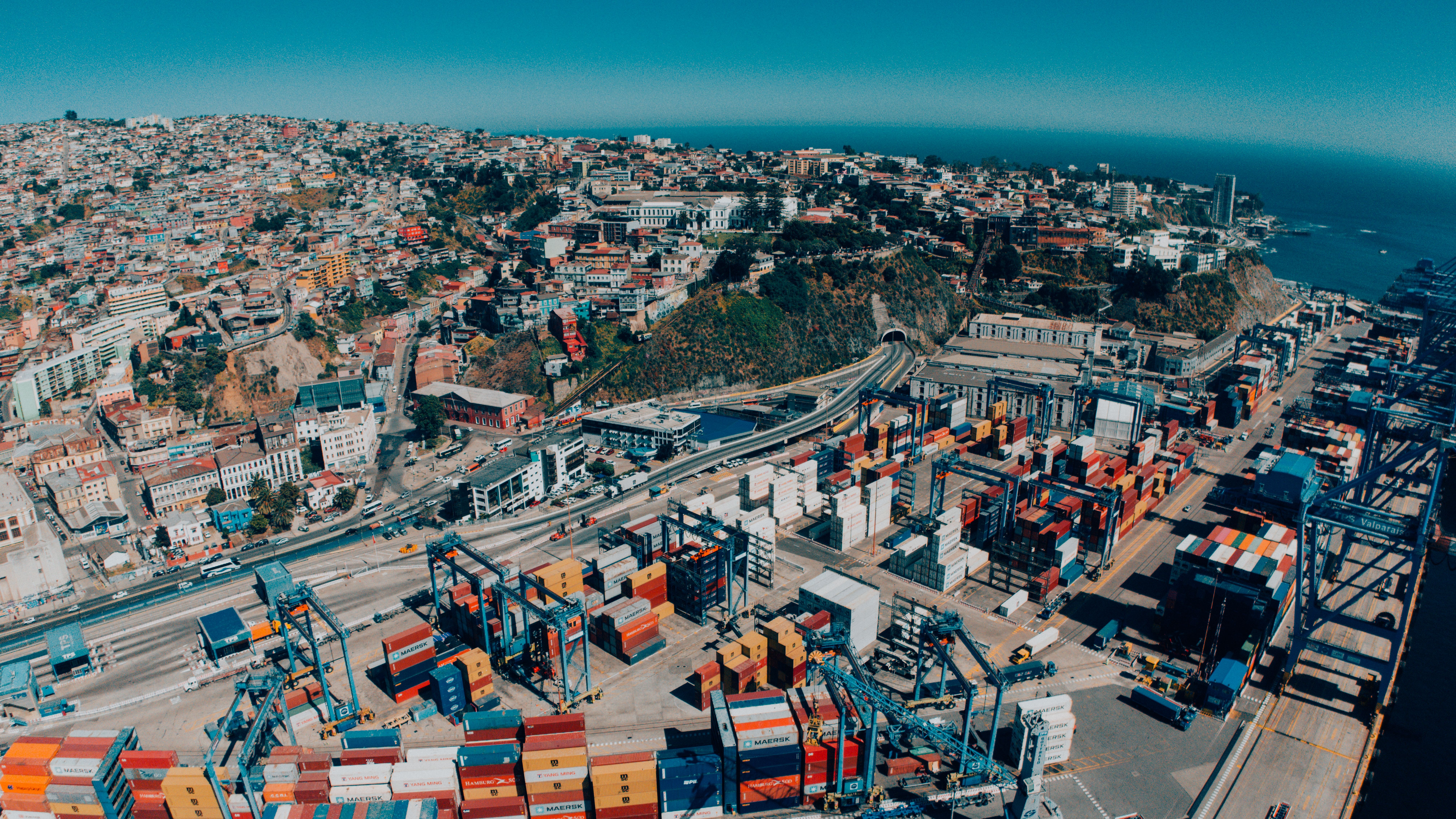
EU Trade Agreements with Latin America
The EU has built an extensive network of trade agreements with Latin American countries over the past two decades. For Spanish exporters, these agreements translate to reduced or zero import duties at the destination — but only if the goods carry valid proof of EU origin.
The main agreements in force or concluded include:
- EU-Mexico — modernised Global Agreement in force, covering a wide range of goods at 0%
- EU-Chile — Association Agreement in force; updated Advanced Framework Agreement also concluded
- EU-Colombia / Peru / Ecuador — Multi-Party Trade Agreement in force
- EU-Central America — Association Agreement covering Costa Rica, El Salvador, Guatemala, Honduras, Nicaragua and Panama
- EU-Mercosur — Agreement concluded with Brazil, Argentina, Uruguay and Paraguay, offering preferential rates on a wide range of EU industrial and agricultural exports
- EU-Cariforum — Economic Partnership Agreement with Caribbean nations
Countries not covered by an EU agreement — including Venezuela and Bolivia — apply standard MFN tariff rates to Spanish exports.
The origin document is what unlocks the preferential rate. Without a valid EUR.1 or origin declaration on the invoice, your goods will pay standard MFN duties regardless of the agreement in force. Always prepare origin documentation before the goods leave Spain.
Proof of Origin: EUR.1 or Invoice Declaration
To claim preferential duties under an EU-LATAM trade agreement, Spanish exporters must include proof that the goods originate in the EU. The two options are:
- EUR.1 movement certificate — issued by Spanish customs (AEAT) at the time of export. Required when the shipment value exceeds the threshold for self-declaration, or when the exporter is not an approved exporter.
- Origin declaration on the invoice — a statement made directly on the commercial invoice by an approved exporter (one that holds an authorisation number from AEAT) or, for lower-value shipments, by any exporter up to the applicable threshold.
Each agreement has its own rules of origin — the criteria that determine whether goods qualify as EU-origin. Complex goods involving materials from third countries need to meet specific processing thresholds. Your freight forwarder or customs agent can advise on whether your specific product qualifies.
AJ Logistics · Madrid
Exporting to Latin America?
We handle sea and air freight from Spain to the whole of Latin America — export documentation, EUR.1 coordination and door-to-door delivery.
Shipping Routes and Transit Times
Algeciras is the principal Spanish port for Latin America, with strong connectivity to both Atlantic and Pacific coast destinations. Valencia and Barcelona also offer direct services to major LATAM ports. Services to the Pacific coast (Chile, Peru, Ecuador) typically involve transhipment at Cartagena (Colombia) or Manzanillo (Panama).
Approximate sea freight transit times from Spain:
- Mexico (Veracruz, Manzanillo) — 15 to 20 days
- Colombia (Cartagena, Buenaventura) — 12 to 18 days
- Brazil (Santos, Rio de Janeiro) — 15 to 22 days
- Argentina (Buenos Aires) — 18 to 25 days
- Chile (Valparaíso, San Antonio) — 22 to 28 days
- Peru (Callao) — 20 to 28 days
Air freight from Madrid or Barcelona to major LATAM hubs (Mexico City, Bogotá, São Paulo, Lima, Santiago) takes 1 to 2 days, usually with one connection.
Import Complexity by Country
The import process and bureaucratic complexity vary significantly across the region. Chile, Colombia and Mexico tend to be the most straightforward — predictable processes, reasonable timelines and transparent import requirements. Brazil and Argentina are historically more complex: Brazil has high base tariff rates (though EU-Mercosur preferences now reduce many), an import licensing system (SISCOMEX / LPCO) and detailed documentation requirements; Argentina has at times applied import restrictions and prior import authorisation requirements. Always confirm current import conditions with your logistics partner or local customs agent before the first shipment to any new country.